


A few weeks ago, I sat down to a family dinner in a brightly-lit restaurant on the outskirts of Louisville, Kentucky. As the meal began, the table buzzed with chatter. Attentive waiting staff passed around plates of salad.
But then something strange happened. Almost nobody touched their starters. As I looked around, wondering if salad avoidance was some sort of Southern tradition I’d not heard of, a distant in-law leaned towards me: “Don’t eat the lettuce.”
It turned out that thousands of Americans had contracted a parasitic infection from eating iceberg lettuce. Two people had died, a thousand miles away in Michigan. “It’s all because Trump has cut the funding,” my dining companion whispered.
That was certainly an oversimplification. But it pointed to a bigger question: what happens when the institutions responsible for protecting people are deliberately weakened – and when the companies those institutions regulate have political influence?
American healthcare experts have said that massive government cuts have made it harder to deal with public health emergencies. The main company implicated in the tainted lettuce, Taylor Farms, had also donated millions to the Republicans, including $1m to Donald Trump’s MAGA Inc Super-Pac and reportedly lobbied the White House to delay a recall announcement.
So what? You might think. Corporates have long sought to influence politics; Big Food has been implicated in health scares long before Trump went down that golden escalator.
But the outbreak that put our table in Kentucky off their salad felt emblematic of what’s going wrong – darkly wrong – on the other side of the Atlantic. It also left me thinking about how we safeguard our own democracy here in Britain.
I travel to the US to visit in-laws most years. I enjoy the family time immeasurably, but every year I return a bit more concerned by what I see.
This summer, after a week in the Midwest, I spent a couple of days in Washington, DC, visiting an old friend, Mark Davey. Mark is a Democracy for Sale subscriber ... who just happens to be the only TV cameraman to enter the Capitol with the insurrectionists on January 6, 2021.
Mark has since retired from ITV News, so he was able to spend the morning taking us on a bespoke walking tour of downtown DC. We saw where Trump had addressed a ‘Stop the Steal’ rally, extolling his supporters to march on Congress where politicians had met to certify Joe Biden’s election win.
We followed the path that the mob took that day, past the towering Washington Monument - a few hundred yards up from the algae-infested reflecting pool - and down the National Mall towards the Capitol dome. Mark pointed to a spot where a gallows had been erected on January 6, to hang Nancy Pelosi, Mike Pence and the other “traitors”.
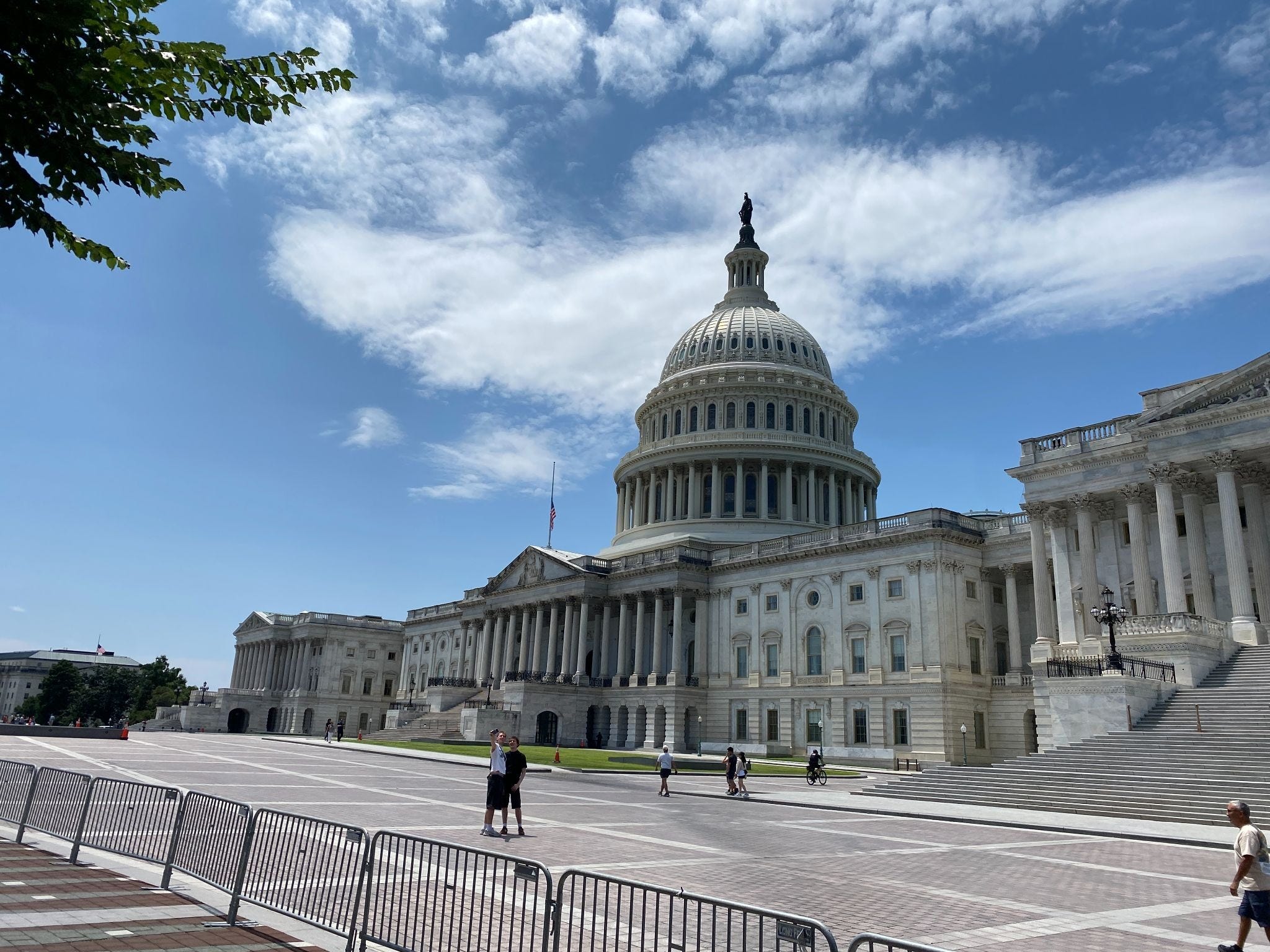
A number of the officers who responded to the US Capitol attack have since died by suicide. Trump granted clemency to all the attackers. (One woman involved turned down the pardon, saying “we were wrong that day, we broke the law – there should be no pardons.”)
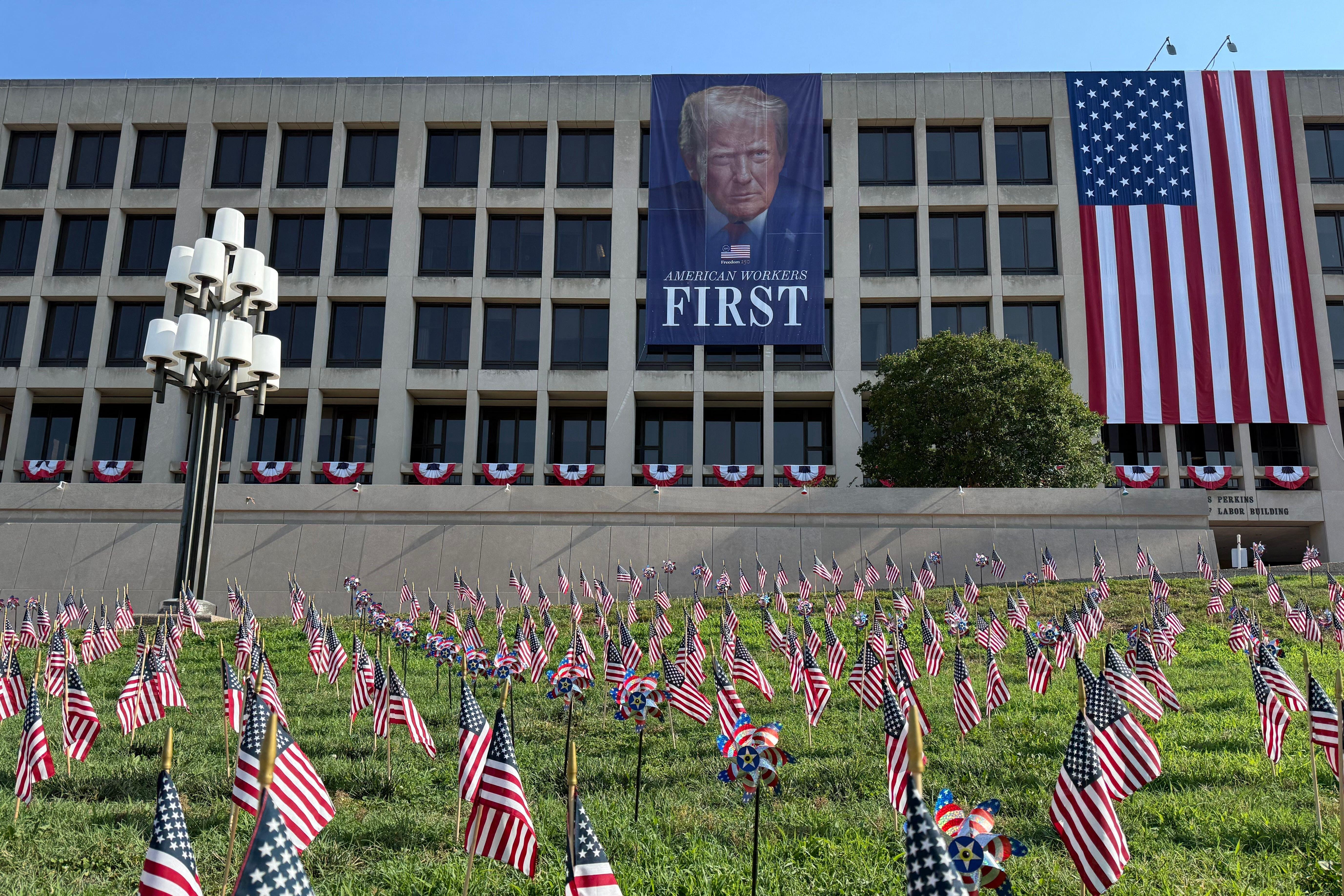
Even on a bright Saturday morning, a dark, martial air pervaded the city. National guardsmen paced the streets. Where once you could practically walk past the White House, now it’s barely visible for squad cars and metal railings. A 30-foot banner featuring Trump’s scowling face opposite George Washington hung from a federal building.
Directly across the White House, the Trump administration wants to install permanent fencing around Lafayette Park, once the focal point for Black Lives Matter protestors. On the other side of the building, Trump’s $400m ballroom project was hidden by scaffolding. A US appeals court recently ruled that the president needs congressional approval for the development.
There has always been a mismatch between America’s self-reverential rhetoric and reality. Freedom and equality was – for hundreds of years – just for white men. But what is frightening now is the erosion of the mechanisms that were supposed to resolve or contain those contradictions.
After hearing first hand from Mark about the events of January 6, we joined an official tour inside the Capitol. It began with a shiny promotional video that, above stirring music, explained that what singles out America is its commitment to resolving disputes peacefully and by dialogue - no mention of January 6.
Afterwards, our avuncular tour guide told us about the wonders of America’s “unique” democratic experiment. As my step daughter pointed out, the supposed checks and balances we were told about at length have not stopped Trump attacking Iran without congressional approval.
The US also felt more suffused with radical right politics than ever before. During our hour-long tour of the Capitol, I passed young (white) men in MAGA hats. One wore a T-shirt proclaiming ‘I was a foetus once’.
The next day, off an interstate in Virginia, a random pitstop restaurant featured quotes from Friedrich Hayek on the bathroom walls and copies of books about Charlie Kirk and Robert Jenrick’s favourite, Suicidal Empathy.
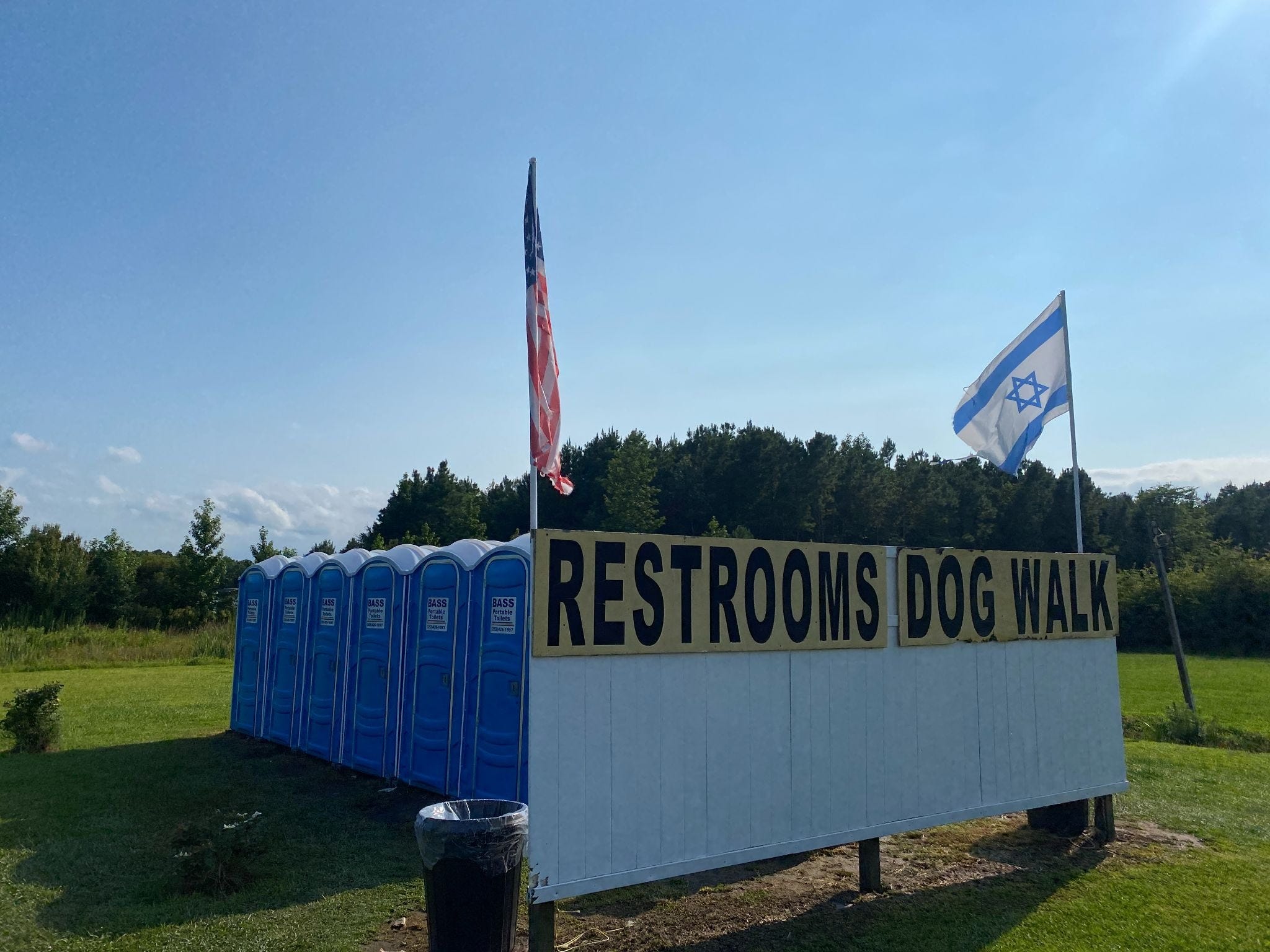
A few miles down the road, we passed a farm shop festooned in Israeli flags. We stopped to use the portacabin toilets but baulked at spending $22 on a loaf of sourdough to “support the Israeli military and the US army”.
Panglossian political commentators maintain that Trump has not done anything all that significant, at least nothing that could not be easily undone by an incoming Democrat.
And sure enough, if, like me, you go on an annual two-week jaunt it’s easy to imagine not that much has changed. (Especially if you’re a white person on a tourist visa.) But I’m not convinced, at all.
The Trump administration has announced that it is not only permanently ending beneficial ownership reporting requirements – a key plank of investigating financial crime – it is *destroying all the data it has collected already on US individuals and companies*. This is a huge blow to global anti-corruption efforts, and almost impossible to undo.
Beyond the corruption and oligarchy at the top of American politics, Trump’s assault on US democracy is having very real effects on everyday life. As we discovered when a tornado hit the Outer Banks in North Carolina during our visit there, funding for weather balloons has been cut, making it harder to predict extreme weather events.
There are wildfires and heat domes, too, while oil and gas companies make record profits and Trump is full-on “drill, baby, drill.”
The opioid crisis Trump promised to end with the border wall continues. Anti-overdose injections have become a feature of ordinary life. In a Waffle House, that most American of roadside eateries, I heard a waitress declare “I’ve seen it all – I had to narcan someone one time”.
So what to take from all this? And what does it mean for those of us outside the United States, but very much in its gravitational pull? America shows what happens when public institutions are hollowed out, when budgets are slashed for ideological reasons, when politics moves from democratic contestation to public spectacle.
This is a key point of political scientist Anton Jäger’s new book, Hyperpolitics. It’s a fascinating - and brisk - distillation of contemporary politics, which argues that we are currently witnessing a period in which politics is everywhere, but in brief, transient forms that leave little long-term footprint, whether that’s Black Lives Matter or January 6.
The answer to an era of hyperpolitics, for Jäger, is not more temporary manifestations but more permanent structures. An avowed leftist, he (half-hopefully) calls for a return to the politics of the party and the union. There is much to recommend this. But I think just as vital are durable institutions that can constrain political power.
I returned from the US thinking about how vulnerable our democracy is. Westminster’s executive is extraordinarily powerful, and so many of the constraints on our politicians depend on convention.
Take the parliamentary standards commissioner, which is currently investigating Farage’s £5m from Christopher Harborne. Boris Johnson tried to defang the commissioner in a bid to save his Tory colleague Owen Paterson. Public and political opprobrium forced a rethink but a future PM might be less likely to resile.
It’s not just standards in public office. From public broadcasting to the Electoral Commission, it would be remarkably easy for a determined government to pull out the wiring of British democracy.
Trump has shown how this can be done. And we are already following the US in many respects. Huge political donations. Oligarchic capture. Democratic oversight and accountability spun as opposition to “the will of the people”.
But we are not inevitably destined to become the United States.
We can build public institutions with teeth. We can replace the ‘good chaps’ theory of government with proper regulation of our politics.
We can succeed where the US has failed: Citizens United destroyed campaign finance reform and opened the floodgates to anonymous money in the US. But if Andy Burnham were to cap political donations, there’s nothing our Supreme Court could do to stop it.
Britain is not America. That is precisely why we still have a chance to learn from what happened there. The question is whether we are willing to act before our own institutions are hollowed out - and before we stop trusting even the lettuce on our plates.
Democracy for Sale is dedicated to uncovering dark money and hidden influence in our politics and fighting against secrecy.
If you are a paid supporter, many thanks. If you aren’t, upgrade today. For £50 a year, you can support independent investigative journalism that really makes a difference.
You noticed in two weeks what people that live there daily won't admit to. No it wasn't just because the of what the little dicktator who is working at destroying America has done to institutions. The people have been sold this illusion since the early 70's and even though life has gotten tougher year after year they keep feeding the public the same nonsense. Maybe not quite the "streets paved with gold" rhetoric but close. I moved to Canada in 1966 and lived on both the west and the east coast, also points in between. At least once a month I would cross the border for a weekend or just to purchase electrical goods which were cheaper there. I would stay for a few days either camping or if the weather was shitty I'd rent a motel room. The minute you cross the border the atmosphere would change. If I walked into a small-town bar or restaurant I would be stared at and it wasn't friendly. If I went over with some native Canadian friends of mine it was positively hostile. Americans have lived with fear on a daily basis because they never know who has a gun and who doesn't. That's my interpretation of it. I returned to Britain after 43 years there. I'm not sorry I left and I'm not sorry I went. Americans are unlike Canadians. Maybe it's the gun laws or ? Yet the difference is palpable. The fact that the little dicktator was elected again wasn't surprising or shocking, just disappointing. At least one third of the country is into some strange religions that states that all brown and black people are sub human and trump got that. He fed them their need to hate "others" with conviction. That's why they don't mind chanting phrases out loud that he taught them at his rallies. The midterms are going to be a defeat for the rethuglicans or he will stop the "will of the people" somehow. When I started listening to our Temu-trump Farage, I thought, it can't happen here. Then again some sane Americans thought it couldn't happen there either! The best I can hope for is that because we've been at this democracy lark longer maybe it will hold. Like you I think erosion of our institutions starts at the top. Getting big money out of politics will go a long way into stemming that rot. Capping single donations at £5K should be enough also. Though I'm noticing that even though the rightwing in the States are outspending the left by hundreds of millions they are losing seats constantly. Which is why I'm dubious about the prez allowing an election. As he's gotten involved with Thiel's and Musk's ideas of eugenics and possibly thinks he can live forever if he supports the right crowd and as he's turned the country into a surveillance state complete with electrified gloves? who knows how far he is willing to go . Or how much the Americans are willing to take. Losing their liberties is starting to bother them but with the private prisons and ICE as his private army this dystopian future might well happen.
It's happening here. Defunding Natural England, the Environment Agency, and other such bodies is sold as 'cutting red tape'.